
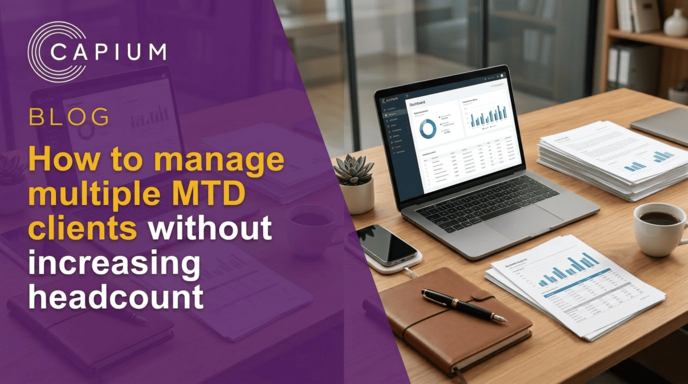
How to manage multiple MTD clients without increasing headcount
For many accountants, the biggest concern around Making Tax Digital isn’t compliance – it’s capacity.
MTD for income tax introduces quarterly submissions, ongoing digital record keeping and more frequent client interaction. On paper, that looks like more work. In practice, firms that approach MTD strategically are finding they can manage multiple clients, not fewer – without increasing headcount. Technology and process improvements are key to managing multiple clients efficiently, streamlining workflows, and maintaining high service quality.
The difference comes down to software, process design and how deliberately firms manage their client base. Consistent delivery is essential, as MTD for Income Tax is reshaping how UK accountants deliver services for their self-employed and landlord clients.
MTD requires proper processes, consistent delivery, and pricing that reflects this new reality.
Accept that not all MTD clients are created equal
One of the first realities to acknowledge is that not all clients require the same level of effort.
Some self employed clients and sole traders are already comfortable with accounting software, digital tools and bank feeds. Others – particularly landlord clients with property income or long-established paper-based systems – may need more support to join MTD. When managing multiple client accounts, it is important to set clear boundaries for communication, tasks, and responsibilities to stay organised and maintain productivity across all client accounts.
Segmenting your client base is essential. Group clients by digital readiness, income sources and complexity rather than treating everyone the same. Client segmentation should also include their tech readiness and compliance deadlines, so you can tailor onboarding and support based on each client’s readiness and complexity to enhance service delivery. This allows accounting firms to focus resources where they’re needed most and avoid over-servicing clients who are already MTD ready.
It also makes it easier to plan the MTD journey realistically, especially as clients start to join MTD individually rather than all at once.
Replace manual processes before workloads increase
MTD exposes inefficiencies that already exist.
Manual data entry, spreadsheet-heavy bookkeeping and repeated chasing for information simply don’t scale when quarterly updates become the norm. Firms that rely on manual processes often feel the strain long before they run out of people. AI and automation can reduce manual processing, improve record quality, and help ensure updates are accurate and on time.
Digital record keeping is the foundation here. Using bookkeeping software and accounting systems that maintain digital records automatically reduces administrative burden and improves accuracy. Centralising information for client work reduces the time spent gathering data and improves sharing. Project management tools help organise multiple projects, track time, and streamline collaboration. Automated bank feeds, receipt capture and real-time data access all save time while improving visibility of income, expenses and cash flow. AI can automatically segment clients based on complexity, set up tasks and reminders, chase documents, and flag potential issues early. Using project management software can significantly improve organisation and collaboration with clients.
This is where Capium’s MTD-compatible software helps firms reduce effort per client, while still delivering compliant MTD services.
Build repeatable quarterly processes
MTD introduces a new rhythm to tax reporting. Quarterly submissions replace the traditional annual rush of income tax self assessment, and that rhythm needs structure.
Defining project deliverables and setting clear expectations for each quarterly submission is essential. This ensures both your team and your clients understand what outputs are required and when, reducing misunderstandings and improving client satisfaction.
Rather than treating each quarterly update as a bespoke task, firms benefit from building repeatable processes. Batch processing tasks by client group on specific days reduces productivity loss due to context switching. Standardising approaches within your firm allows for a ‘one-to-many’ service model, reducing inconsistencies. Standardising on one or two MTD-compatible software platforms also reduces staff training time and allows for consistent troubleshooting. Standard checklists, fixed review points and consistent cut-off dates reduce variation and decision fatigue.
Practice management tools play a big role here. Tracking deadlines, automating reminders and prioritising tasks based on urgency helps teams manage quarterly submissions without constant firefighting. When everyone knows what “good” looks like each quarter, workloads become predictable.
Clear planning and setting realistic expectations with clients can help you manage the workload and ensure you’re providing the focus each client needs.
Use practice management software for visibility and control
Managing more clients without increasing headcount depends on visibility.
Practice management tools give instant access to who has submitted data, who hasn’t, which quarterly updates are due, and where bottlenecks are forming. This real time visibility is critical when dealing with dozens – or hundreds – of MTD clients. Managing multiple accounts efficiently also relies on strong team collaboration, ensuring that roles are clearly assigned and workloads are balanced across the team.
Combined with audit trails and agent services account access, this reduces risk and improves control. It also supports collaboration, particularly where multiple agents are involved in managing a client’s MTD data. Maintaining clear boundaries between different client projects is essential to prevent mix-ups and distractions, and a proactive, automated, and standardised digital workflow is key for managing MTD clients effectively. Managing multiple client accounts requires a degree of separation between projects and project owners to ensure quality and efficiency.
Educate clients to reduce friction
Client education is a force multiplier.
When clients understand what’s required under Making Tax Digital – and why digital for income tax works differently from a traditional self assessment return – firms spend far less time answering the same questions repeatedly. Effective client communication and great communication are essential for managing expectations, reducing friction, and ensuring smooth interactions, especially when handling multiple MTD clients.
Short guides, onboarding sessions and clear explanations around quarterly updates, digital records and final declarations all improve client experience. Developing a knowledge hub with self-service resources and a central database including FAQ sheets and templates helps staff answer common client questions consistently and efficiently. Educated clients submit better data, earlier, and with fewer errors.
That directly improves client satisfaction while saving time across the accounting practice. Seeking feedback, staying in touch, and asking for client input through meetings, emails, or shared documents are key to meaningful client engagement and building lasting relationships.
Consider outsourcing routine work to protect in-house capacity
Outsourcing is becoming a practical part of many firms’ MTD strategy.
Routine tasks such as bookkeeping, data entry and even quarterly submissions can be outsourced using trusted partners and digital systems. Outsourcing allows accountants to deliver MTD IT services without the risk and expense of recruitment, while securing many advantages. It provides access to highly skilled accountants at typically 50 percent lower costs than UK rates and converts rising costs of employment into predictable, fixed expenses, helping accountants plan cash flow with confidence. Outsourcing can help control costs while delivering MTD IT services effectively, providing predictable pricing and reducing operational expenses, compared to recruiting and maintaining in-house staff.
Remember: outsourcing works best when combined with strong digital systems and clear processes – not as a last-minute fix, but as part of a deliberate operating model.
Use real time data to shift conversations
One of the biggest hidden benefits of MTD is access to real time data.
With digital records and quarterly reporting in place, accountants gain better visibility of business performance, income streams and cash flow during the tax year – not after it ends. Engaging with client data on an ongoing basis is now essential, as quarterly updates mean you must maintain a high standard for record quality throughout the year. This continuous interaction with client data allows firms to help clients comply with MTD by transitioning them from paper records to cloud accounting, using tools that let clients photograph receipts, and educating them to handle data entry themselves, reducing workload during peak periods.
That creates opportunities to turn compliance work into advisory services without adding extra workload. Paying attention to the details in planning, organisation, and client communication is crucial when working with real-time data, ensuring nothing is missed and client relationships remain strong.
Instead of reacting to historic tax returns, firms can support clients proactively, deepening client relationships and improving the overall client experience. Shifting to value-based pricing with tiered, recurring packages and moving away from annual fees towards monthly retainers reflects the ongoing service and regular engagement now required, helping clients understand what is included and how their choices affect the fee.
Prepare early to avoid last-minute pressure
Worth noting – preparation matters.
Each client must be signed up individually for MTD, and leaving this until the last minute creates unnecessary pressure. Firms that prepare early, segment clients properly and transition gradually are far better placed to handle growth as more clients fall within scope.
Planning ahead is crucial for managing multiple MTD clients, as it allows for better time allocation, project tracking, and effective time management. Utilising time blocking strategies helps dedicate specific chunks of time to particular clients or tasks, ensuring workloads remain manageable.
To further streamline processes, create strict, pre-agreed timelines for data submission and consider implementing blackout weeks during peak periods to avoid overload. Setting expectations with clients about services, pricing, and deadlines helps prevent misunderstandings and supports transparency. Identifying and managing risks, such as last-minute preparation or resource conflicts, is essential to maintain smooth operations and client satisfaction.
It’s also important to regularly check your profitability by client or project, so you can make informed decisions about future planning and resource allocation.
This is especially important as new rules expand and more clients join MTD across income tax, VAT registered businesses and, eventually, corporation tax.
Turning MTD into a growth enabler
Many accountants worry that managing multiple MTD clients means increasing headcount. In reality, firms that invest in the right software and make their processes great are finding the opposite. Managing multiple clients and projects effectively requires good organisation, discipline, and the right tools to ensure nothing falls through the cracks.
By reducing manual work, improving visibility and designing services around quarterly reporting, firms can handle more clients, deliver MTD compliance confidently and protect capacity at the same time. Juggling multiple clients can impact job satisfaction, but with better service, clear communication, and realistic expectations, most clients benefit from more efficient and higher quality support. Good communication is essential to manage client expectations and prevent misunderstandings.
Making Tax Digital is a challenge – but handled well, it’s also a chance to build a more efficient, scalable and resilient practice.