
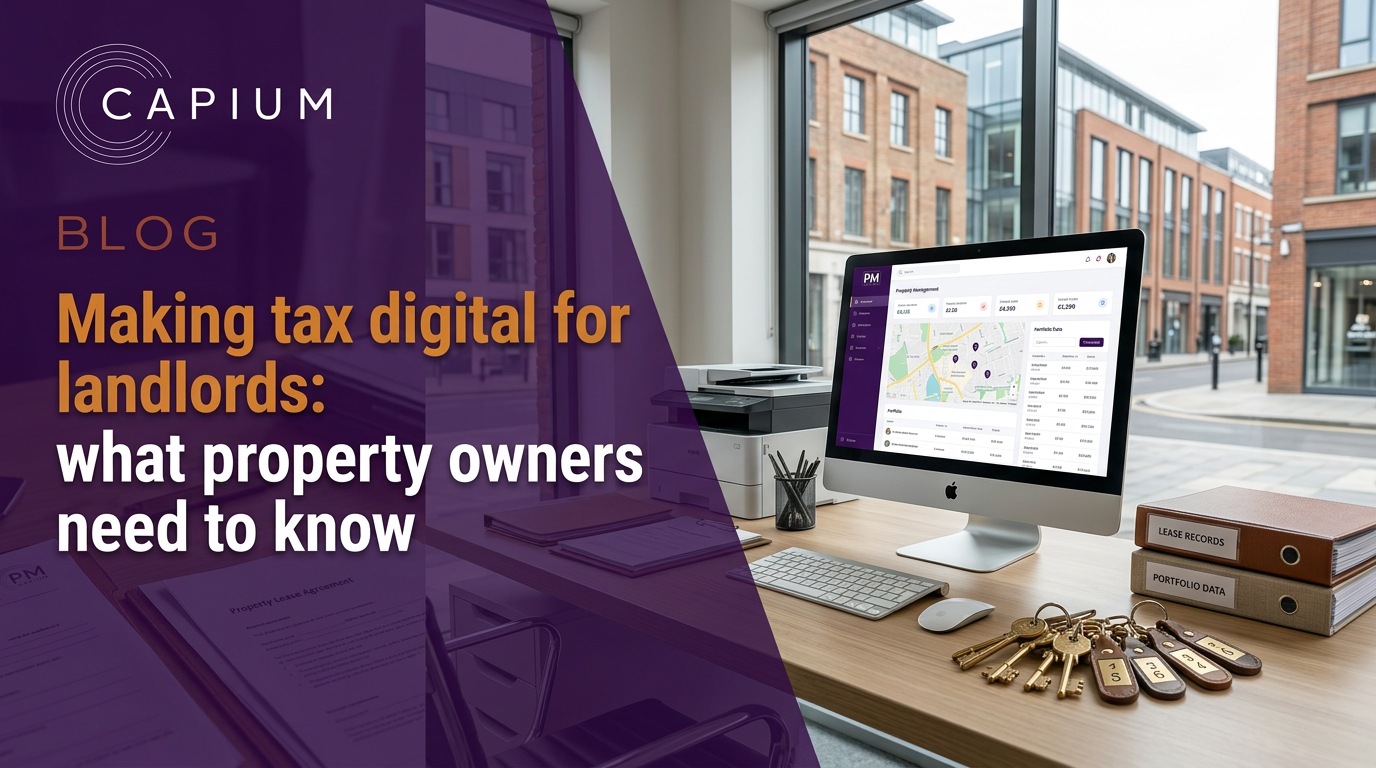
Making tax digital for landlords: what property owners need to know
Making Tax Digital is no longer just a concern for VAT registered businesses. For landlords with UK property income, the government’s plan to extend tax digital for income means changes are on the horizon – and understanding how they apply to rental income is key.
Landlords with annual income above a specific income threshold will be required to comply with Making Tax Digital, so it is important to know if your property income meets or exceeds this limit.
Whether you own one rental property or manage several, Making Tax Digital for landlords raises practical questions. What counts as qualifying income? How does this affect the self assessment tax return? And what does digital record keeping actually involve?
The requirement to join Making Tax Digital for Income Tax is being phased in based on qualifying income from the 2024–25 tax year onwards, with staged introduction between April 2026 and April 2028, so landlords should use this lead-in period to work through structured Making Tax Digital resources and guides.
Here’s what property owners need to know, along with practical Making Tax Digital readiness guidance that can help you prepare.
How Making Tax Digital applies to landlords
Making Tax Digital for income tax focuses on how income tax is reported, not on changing income tax rules themselves. For landlords, the starting point is property income.
Total income for MTD purposes includes rental income, sole trader income, and self employment income. The income tax threshold is based on the sum of these sources.
If your qualifying income exceeds HMRC’s threshold, and that income includes rental income from UK property, foreign income such as overseas rental income, or self employment income, you may fall within scope of MTD for income tax. The income tax threshold for MTD for Income Tax is set at £50,000 gross annual income from property or self-employment for the 2024-2025 tax year, reducing to £30,000 from April 2027 and £20,000 from April 2028. These thresholds apply to your total gross annual income from property and self-employment combined.
Qualifying income is based on gross income, not profit. That means gross rental income before expenses such as letting agent fees, maintenance costs, or mortgage interest. For joint property, each owner’s share of gross income is used to determine if they meet the threshold.
Employment income taxed through PAYE and bank interest do not count towards qualifying income, but they may still be included later in the final declaration. Sole trader income and self employment income are included in the calculation for the MTD threshold.
MTD for Income Tax applies to individuals, not limited companies. Landlords operating through a limited company are currently exempt from Making Tax Digital for Income Tax and will continue to pay corporation tax and submit standard company accounts and tax returns to HMRC and Companies House.
UK residents and non-residents are treated differently: non-resident landlords are not automatically exempt from Making Tax Digital, but those completing residence pages of the tax return will not be brought into MTD until April 2027. Foreign income, such as rental income from overseas properties, may be included in your total income for threshold purposes.
You are automatically exempt from Making Tax Digital for Income Tax if you are a trustee, a person without a National Insurance number, a personal representative of someone who has died, a Lloyd’s member, or a non-resident company. If you receive income from shares in a real estate investment trust (REIT), you are also exempt from MTD for private landlords.
What counts as property income?
Property income generally includes income from residential properties such as flats and apartments, whether you own one property or more than one. This includes income from:
- UK property income
- Foreign property income
- Jointly owned property, where income is declared separately
Landlords are required to report when they receive rental income, and this triggers the need to comply with Making Tax Digital if the relevant income thresholds are met.
If a property is owned jointly, each owner reports their share of the rental income. Joint property owners can report only their share of gross income in quarterly updates, with expenses reported in the final annual declaration. Making Tax Digital does not change how income is split – but it does affect how that income is recorded and reported.
Digital record keeping for landlords
One of the biggest shifts under Making Tax Digital is the requirement to maintain digital records. Utilizing accounting software that records every transaction digitally is mandatory for MTD compliance.
Landlords will need to keep correct digital records of rental income and expenses. Manual records or spreadsheets are no longer sufficient unless they are digitally linked to compatible software that connects directly to HMRC systems. The software must enable electronic communications with HMRC through their API platform, allowing landlords to submit tax information and updates electronically. Landlords can check for suitable MTD-compatible accounting software on the HMRC website.
This includes recording income received, such as the gross amount deposited into your bank account from property letting activities, expenses incurred, and maintaining financial records in a compatible digital format. Landlords should ensure their software is updated in time, as some older accounting packages may not be updated for MTD compliance. Landlords with multiple properties can manage all their properties in a single piece of MTD-compatible software. You can start preparing now by signing into your property management software, uploading your properties, and connecting your bank accounts using Open-Banking technology.
Expenses may include agent fees, letting agent fees, maintenance costs, and other allowable costs. Residential property finance costs such as mortgage interest are still subject to existing income tax rules and are handled through the final declaration rather than quarterly updates.
The aim is not perfection, but consistency. HMRC expects landlords to maintain business records digitally throughout the tax year.
Quarterly updates and rental income
Under MTD for income tax, landlords must submit quarterly income and expenditure summaries to HM Revenue and Customs (HMRC) using MTD for Income Tax software, replacing the traditional Self Assessment return. These quarterly updates must be submitted by the 7th of August, November, February, and May each year, and the Final Declaration must be submitted by 31 January to confirm the accuracy of all submissions.
These updates:
- Do not calculate a tax bill
- Do not replace the final tax return
- Are not the same as annual tax returns.
Each late quarterly update or final declaration results in one penalty point, with a £200 fine after four points. HMRC will introduce this points-based penalty system from April 2026, but will not apply late submission penalties for the first 12 months.
Landlords are required to report allowable expenses in each quarterly update and in the Final Declaration. Digital systems improve accuracy and reduce human error in income tax calculations and tax liability, helping landlords meet their tax obligations. Security deposits are not treated as income unless withheld for damages or unpaid rent.
They provide HMRC with a snapshot of income and expenses during the tax year. At the end of the year, a final declaration replaces the traditional self assessment tax return and confirms taxable income, adjustments, and reliefs.
For landlords used to annual reporting, this is a shift – but it can also provide earlier visibility of income tax exposure.
What doesn’t change for landlords
Despite the move to digital reporting, much stays the same, including the need for compliant MTD for VAT software if you are VAT registered.
Income tax rules still apply as they do now. You still pay income tax on taxable income, capital expenditure is treated as it always has been, and capital gains rules are unaffected. Capital gains tax from property transactions is outside the scope of Making Tax Digital for Income Tax and must be reported separately to HMRC within the required timeframe. Landlords with an annual turnover below the Making Tax Digital threshold can apply a three-line accounts approach. Corporation tax only applies where properties are held in a company, not to individual landlords, and limited company landlords are not affected by Making Tax Digital and will continue to pay corporation tax.
The tax year structure remains unchanged, and tax is still paid in line with existing deadlines.
Software considerations for property owners
Choosing the right software is a practical decision, not a technical one.
Some landlords may already use property management software or spreadsheets to track rental income and expenses. These can continue to be used, provided they connect to HMRC using compatible software for small businesses, sole traders, and landlords and maintain digital links.
Others may prefer income tax compatible software that brings record keeping, quarterly updates, and final declarations into one place. The right solution depends on how complex your property business is, whether you have more than one property, and how you currently manage your tax affairs.
The key requirement is that any tools used are MTD compatible and capable of maintaining digital records and submitting quarterly updates. Using MTD-compatible software simplifies the process of tracking income and expenses for your property business and helps you accurately report your total gross income. You should also make sure your software is compatible with the system, so you are ready. Landlords who work with accountants may benefit from practices that use an integrated MTD hub for managing clients’ digital tax obligations. Landlords should consider signing up for MTD early to handle Making Tax Digital requirements and become familiar with the digital system before it becomes mandatory.
Planning ahead as a landlord
Even if Making Tax Digital does not apply to you immediately, it is clearly part of the government’s plan for the wider UK tax system, so exploring MTD-compatible accounting software ahead of time can make the transition smoother.
Landlords who begin keeping digital records early, separate rental income from other income, and review their software options are better placed to adapt smoothly when tax digital requirements apply. Before you pay tax under the new system, you will need to sign up for MTD on the HMRC website and complete the relevant registration. Only income you receive from property letting counts towards the MTD threshold; income from selling or disposing of a property (capital gains) does not count towards the income threshold for Making Tax Digital for Income Tax purposes.
The question is not just whether your gross income exceeds the threshold today, but whether your rental business is prepared for digital reporting in the future.
Making MTD simpler for landlords
Capium’s MTD compatible software supports landlords with digital record keeping, quarterly updates, and final declarations – helping property owners stay compliant with tax digital requirements while keeping control of their rental business.