
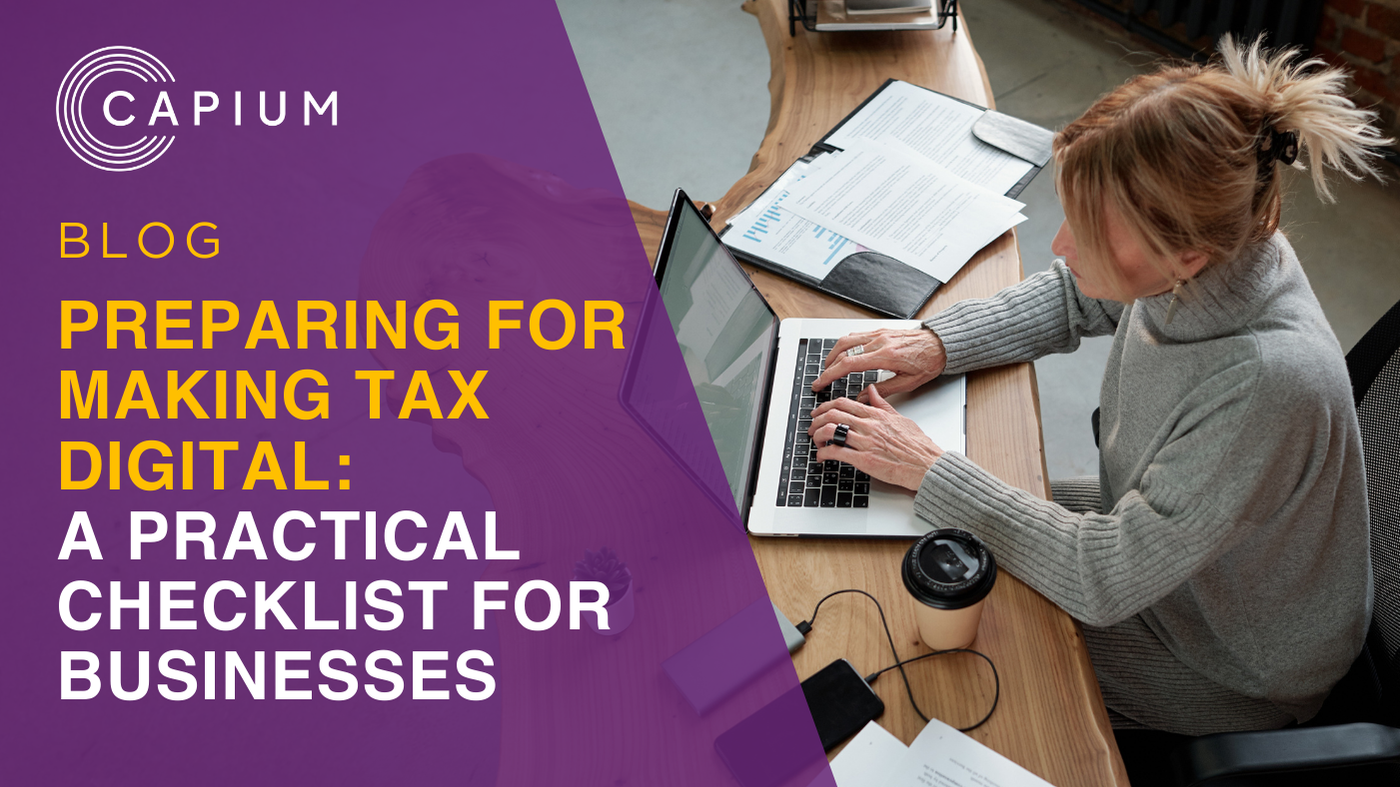
Preparing Your Business for Making Tax Digital: A Practical Checklist
Making Tax Digital for Income Tax (MTD IT) is fast approaching, and while the conversation around it has been ongoing for several years, many businesses and accounting practices are still working out exactly what preparation looks like in practice.
For some, the challenge is understanding the technical requirements. For others, it’s deciding how to transition existing record-keeping processes without creating unnecessary disruption.
The key is to start preparing early. Moving to digital record-keeping and quarterly reporting doesn’t need to be complicated, but it does require the right structure, tools and workflows.
Below is a practical checklist to help businesses begin preparing for MTD IT with confidence.
-
Understand Whether MTD IT Applies to You
The first step is determining whether your business will fall within the scope of MTD for Income Tax.
MTD IT will apply to self-employed individuals and landlords whose income exceeds the government’s threshold requirements. Instead of submitting one annual tax return, businesses will be required to maintain digital records and submit quarterly updates to HMRC.
Understanding when the rules apply to you allows time to plan the transition properly rather than rushing to make changes close to the deadline.
-
Review Your Current Record-Keeping
Many small businesses still rely on spreadsheets or manual records. While spreadsheets may still be usable in certain situations, they must form part of a compliant digital record-keeping process.
Now is a good time to review:
- How income and expenses are currently tracked
- Whether records are stored digitally
- How easily data can be organised for reporting
If record-keeping processes are inconsistent or overly manual, switching to a structured digital workflow can significantly reduce the time spent on compliance.
-
Choose MTD-Compatible Software
One of the core requirements of MTD IT is the use of software that can maintain digital records and submit information directly to HMRC.
Choosing the right platform is important. Ideally, businesses and accountants should look for software that can:
- Capture digital records efficiently
- Integrate bookkeeping and tax processes
- Support quarterly reporting requirements
- Reduce the need for duplicate data entry
Using an integrated platform can make the entire process smoother by bringing bookkeeping, reporting and tax submissions together in one system.
-
Get Comfortable with Quarterly Updates
MTD IT introduces a major shift in how tax information is reported.
Instead of a single annual submission, businesses will need to send quarterly updates to HMRC summarising income and expenses. This means record-keeping will need to become more consistent throughout the year rather than being addressed only at year end.
For many businesses, adopting a regular monthly or quarterly review process now can make the eventual transition much easier.
-
Work Closely with Your Accountant
MTD IT will increase the importance of collaboration between businesses and their accountants.
Accountants can help with:
- Choosing the right software
- Setting up digital workflows
- Ensuring records meet HMRC requirements
- Preparing quarterly submissions
By working together early, businesses can ensure their systems and processes are ready well before the new reporting structure becomes mandatory.
-
Start Transitioning Early
One of the most common mistakes businesses make with regulatory changes is waiting until the deadline approaches.
Transitioning to digital processes gradually allows time to test systems, train staff if necessary, and resolve any workflow issues before MTD requirements become fully enforced.
Businesses that start preparing now will find the transition significantly smoother than those who leave it until the last minute.
Turning MTD Preparation into an Opportunity
Although MTD IT introduces new compliance requirements, it also presents an opportunity for businesses to modernise their financial processes.
Digital record-keeping and integrated accounting software can provide better visibility over income, expenses and cash flow throughout the year. Instead of focusing purely on compliance, businesses can use the transition to improve financial organisation and decision-making.
With the right preparation, MTD IT can become less of a disruption and more of a step toward more efficient financial management.
Get Your Business MTD IT-Ready
Making Tax Digital for Income Tax is one of the most significant changes to the UK tax reporting system in recent years. Preparing early, adopting digital record-keeping, and working with the right technology will help businesses navigate the transition smoothly.
By taking practical steps now, businesses can avoid last-minute pressure and ensure they are ready when MTD IT requirements come into effect.