
Is Your Accounting Software Stack Working Against You?
Why the next stage of digital transformation may be less about adding technology — and more about connecting it
Accounting firms have never had more technology at their disposal.
Cloud accounting, AI, practice management, workflow automation and specialist compliance platforms have transformed how practices operate. Yet many firms are facing an unexpected problem: more technology doesn’t always mean a more efficient practice.
A firm can have excellent software for every area of its business and still spend too much time switching between platforms, searching for information, duplicating data and chasing updates.
The question is changing.
Instead of asking “What software should we buy next?”, firms are increasingly asking:
“How well does all our software work together?”
The hidden cost of disconnected systems
The cost of a fragmented technology stack isn’t simply the number of software subscriptions a firm pays for. It’s the time people spend making those systems work together.
Consider a busy compliance period. A manager wants an overview of several clients approaching a deadline. The information exists, but it sits across different systems, notes and email conversations.
Nobody has made a mistake. Yet someone still has to piece everything together.
Repeated across a practice, these small interruptions become significant. Staff spend time switching between applications, re-entering information, searching for updates and chasing colleagues instead of focusing on work that requires their expertise.
With research suggesting that 69% of accountancy firms are already operating at, or close to, full capacity, reducing this operational friction is becoming increasingly important.
Software decisions are now business decisions
Software used to be assessed largely on what it could do.
Today, firms need to consider something bigger: how it fits into the wider practice.
A new platform might improve one process, but if information then has to be manually transferred into three other systems, the overall benefit can quickly disappear.
This is why software consolidation doesn’t necessarily mean eliminating specialist software. It means making more deliberate technology decisions so that each investment strengthens the wider practice rather than adding another layer of complexity.
Research highlighted in the whitepaper found that 63% of firms with highly integrated systems reported significant revenue growth.
Integration isn’t necessarily the reason those firms grew, but it raises an important question: are firms getting the full value from the technology they already have?
AI makes the question even more important
The rise of AI makes connected technology even more relevant.
Two firms can adopt the same AI capability but achieve very different results depending on how accessible and connected their underlying information is.
The next stage of digital transformation may therefore be less about simply adopting AI and more about creating the foundations that allow firms to use emerging technology effectively.
As MTD, AI and changing client expectations continue to reshape the profession, firms need technology environments that can adapt without creating more complexity.
What does a connected practice look like?
A connected practice isn’t necessarily one with the fewest applications.
It’s one where technology supports the way people actually work.
Information can be found when it is needed. Teams have greater visibility. Processes are easier to follow. Clients know what is expected of them. Data doesn’t have to be repeatedly entered into different systems.
Ultimately, the most successful firms may not be those with the biggest technology stacks, but those that are most intentional about how their technology works together.
The future may belong to connected practices
The accounting profession has spent years adopting technology. The next challenge could be making that technology work harder as a whole.
Software consolidation isn’t about eliminating choice. It’s about creating a more coherent technology environment where systems, people and processes support one another.
The question isn’t how much technology your practice has.
It’s how effectively that technology works together.
Explore the future of accounting technology
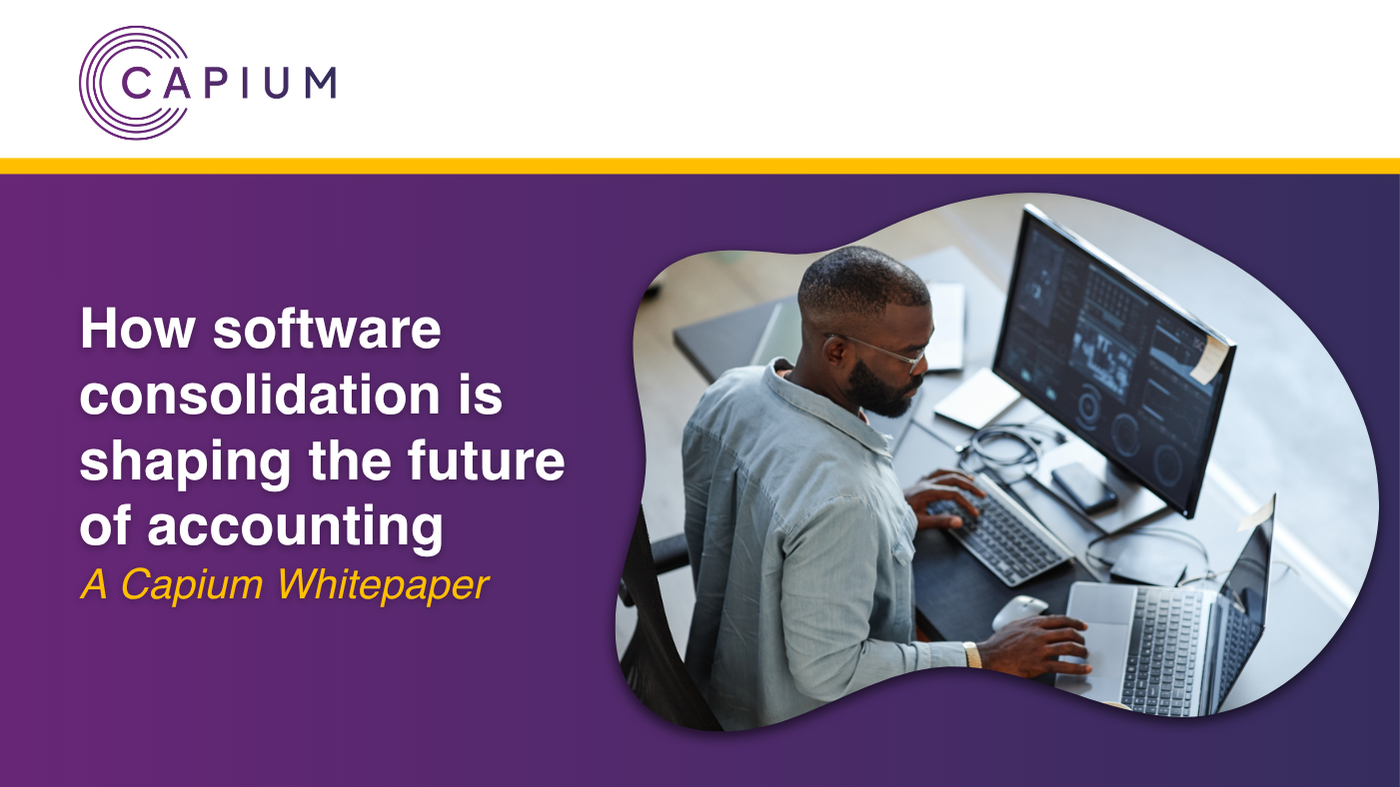
Our latest whitepaper, How Software Consolidation Is Shaping the Future of Accounting, explores why firms are rethinking their technology stacks, the hidden cost of disconnected systems and how a more connected approach could support efficiency, growth and adaptability.
Download the whitepaper and explore the future of software consolidation